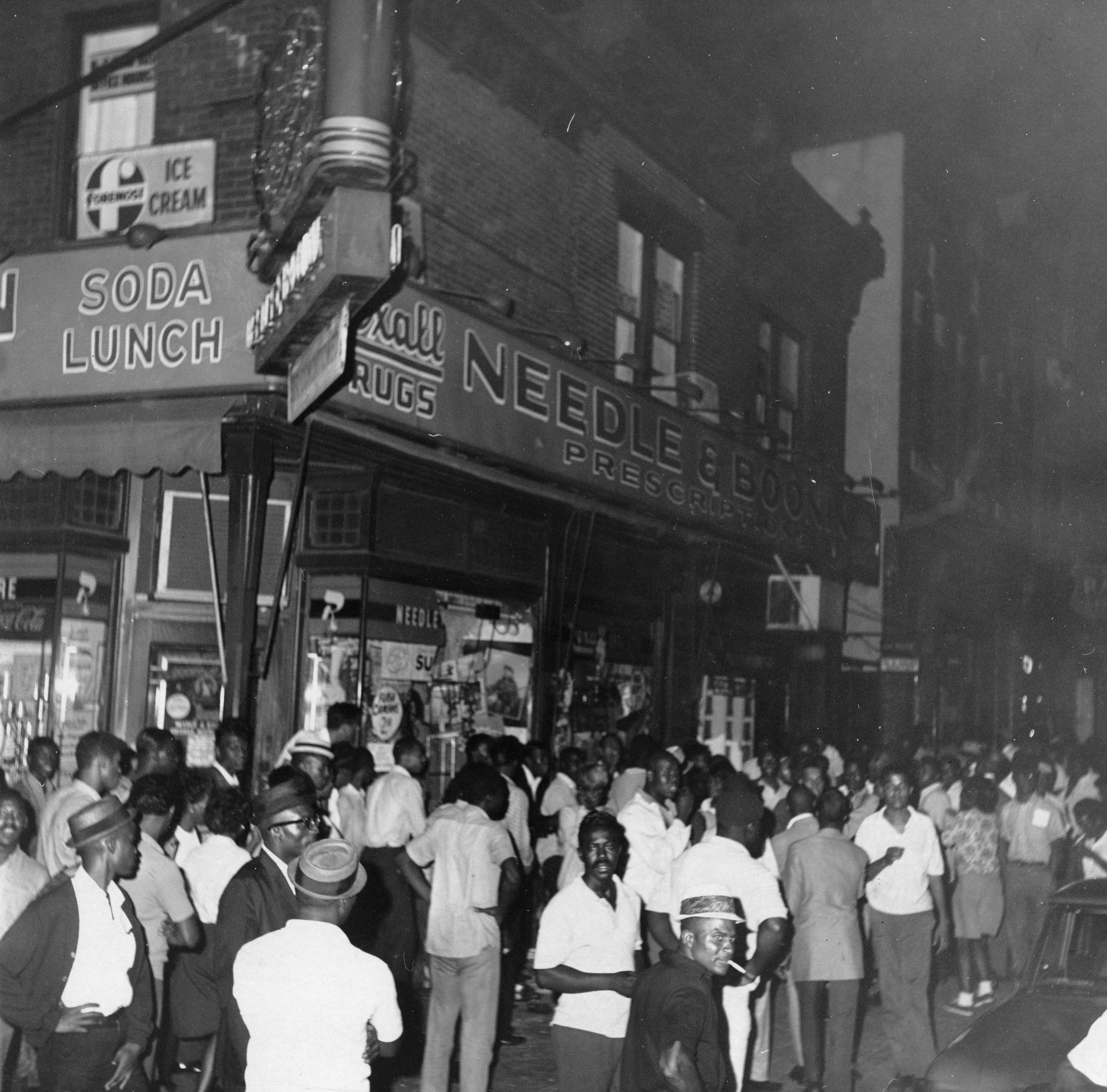
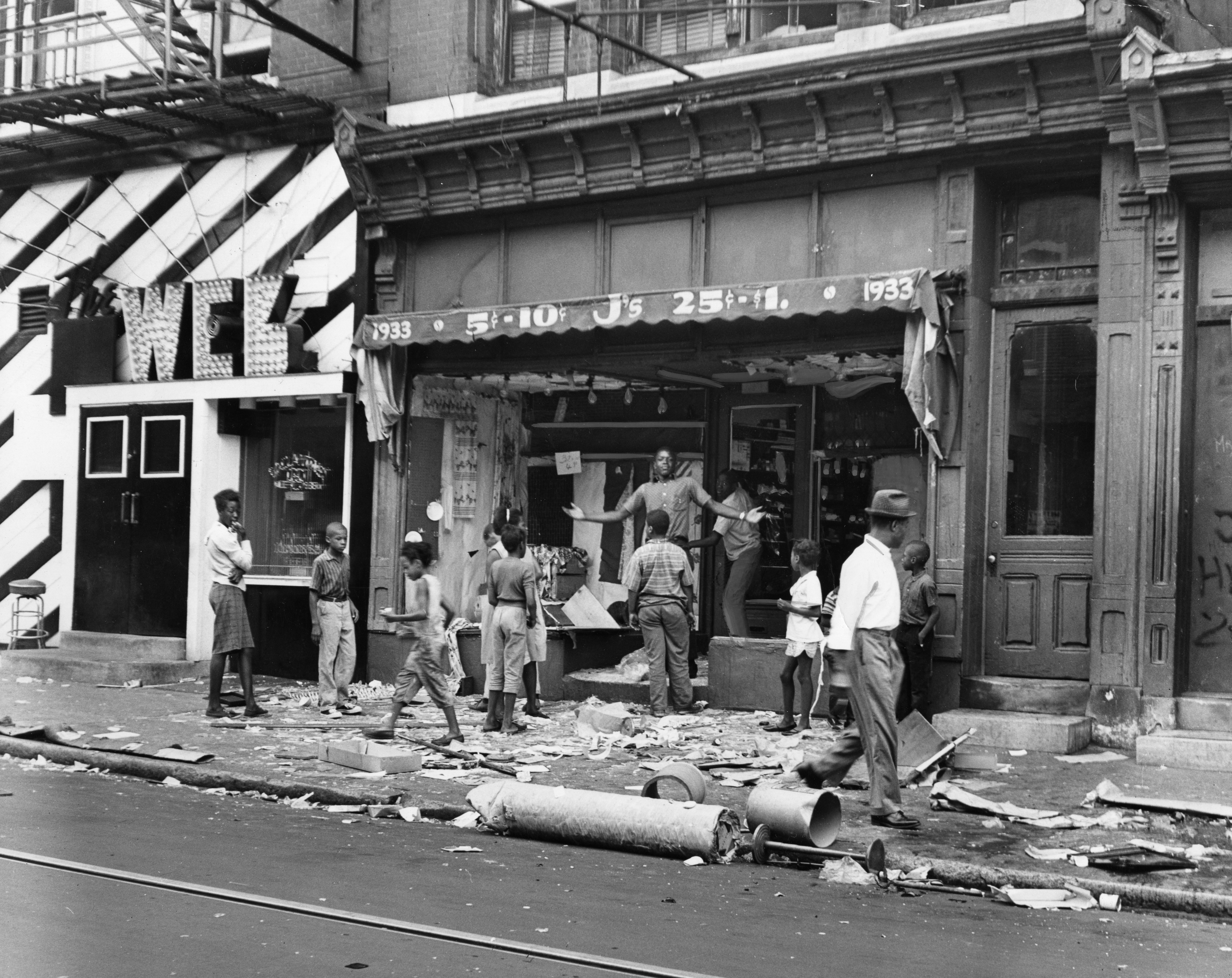
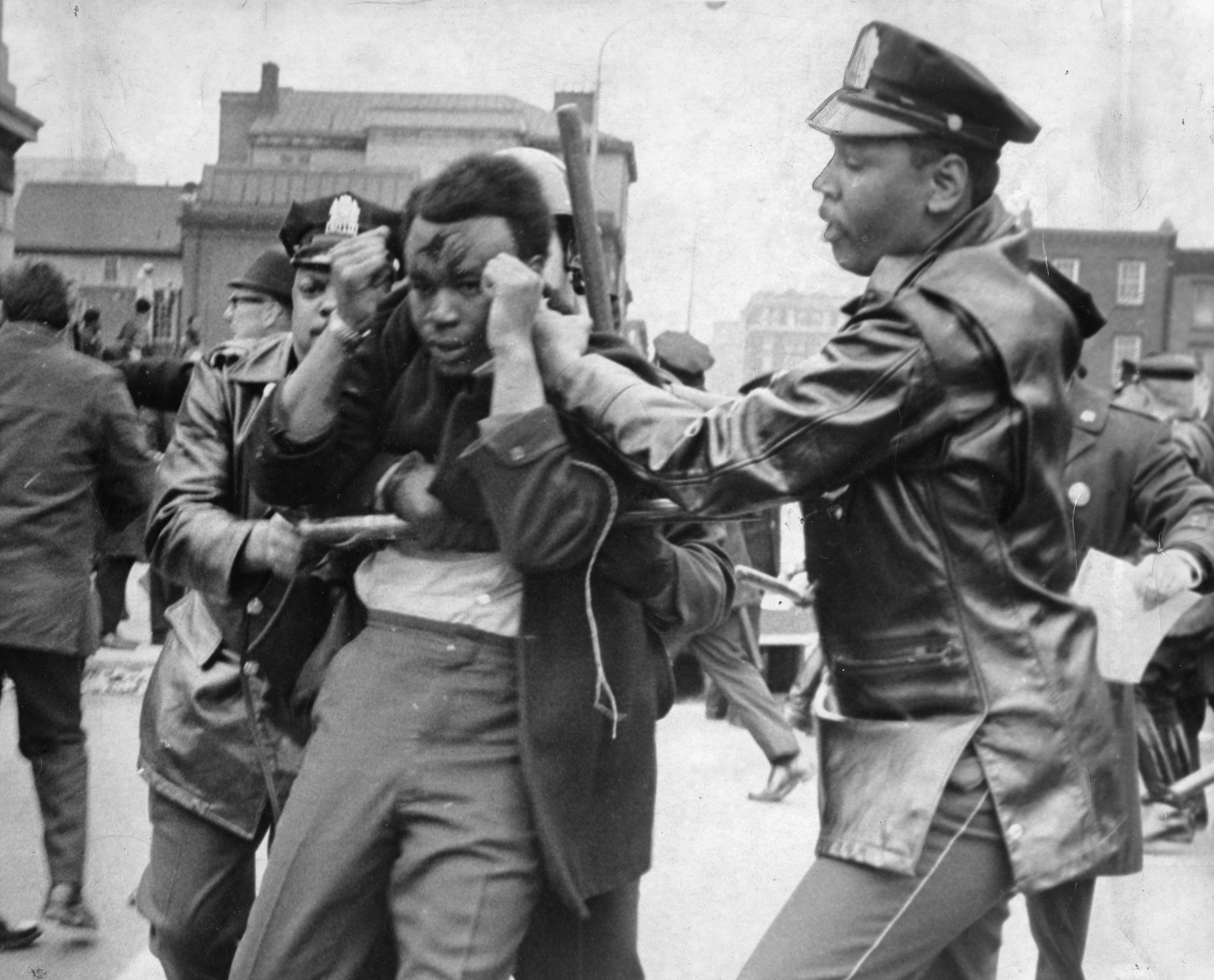
is a project of Whitfield CoLabs under the artistic direction of Tony Whitfield. Whitfield's Shotgun! collaborators are photographer /media artist Richard Stuart Perkins and rapper/ musician/composer Will Sheridan. Bring this artistic expertise and the histories and experiences as queer African American men, their collaboration will respond to the confluence of events that have brought together issues of race, gender, violence, policing and social justice together as facets of a revived and reconfigured civil rights movement at forefront of American consciousness. This project is built upon the ways in which they find responses in Junior Walker and the All-Star's 1965 R&B hit,Shotgun. Working together, this group of artist will create an installation and a series of public programs that have as their centerpiece a "music video" that references the area in North Philadelphia, where Whitfield spent much of his pre-adolescent years. That area has since been leveled and remains a site of urban poverty and abandonment spurred on by riots that took place in the summer that preceded the release of Shotgun. As a gay child, this is the area where Whitfield recognized his sexuality and came to understand it as factor that would increase his isolation and launch him into an ongoing struggle for full actualization. This project is, in essence, his discussion with a group artists with similar backgrounds about rage and self-actualization. Together, this group of artists will produce an environment borne out of their realities as queer black men, who have matured in the contexts of ongoing debates about race, gender, sexuality, civil rights and liberation movements, while benefitting from affirmative action, education, and degrees of privilege and social mobility --all in the shadow of AIDS and other circumstances that threaten their integrity and survival.
SHOTGUN! is a project of Whitfield CoLabs with fiscal sponsorship provided by Fractured Atlas. To be presented at LaMaMa Galleria, 46 Great Jones Street, Fall 2017 (specific date to be determined).
Shotgun Lyrics
"Shotgun" was written by Dewalt, Autry.
I said, "Shotgun, shoot 'em for he runs now"
Do the jerk, baby Do the jerk, now Hey
Put on your red dress And then you go Downtown I said buy yourself a shotgun now We're gonna break it down baby now We're gonna load it up baby now And then you shoot him for he runs now
I said, "Shotgun, shoot 'em for he runs now" Do the jerk, baby Do the jerk, now Hey
Shotgun shoot 'em for he runs now Do the jerk, baby Do the jerk, now Hey!
Put on your high heels shoes I said we're goin' down here listen to 'em play blues We're gonna dig potatoes We're gonna pick tomatoes
I said, "Shotgun, shoot 'em for he runs now" Do the jerk, baby Do the jerk, now Hey
I said, it's twine time I said, it's twine time I said, it's twine time Hey, what did I say him?
"Venus Rising: Seeing through Blackness, Laughing Through Whiteness"
by Tony Whitfield in collaboration with David Hamilton Thomson
digital prints on archival paper
2014-2015
Initiated as a somewhat traditional interaction between photographer and model, this work represents the unexpected intersection of distinctly different artistic practices and has become phase one in a collaboration between choreographer/performance artist David Hamilton Thomson and artist/designer Tony Whitfield exploring maturation in an idiosyncratic racialized body.
Tony Whitfield: My collaboration with David Thomson is an outgrowth of my ongoing exploration of the intersections of race and cultures, through a variety of media, in the context of queer relationships. Specifically the traditions of the superficially parallel devices of blackface and whiteface are expanded and sexualized in this work, revealing profoundly different coded interpretations. In this work with David, to date, I am fascinated by the ways in which these contexts facilitate the revelation of character.
David Thomson: These photographs have become an extension of my exploration of the performance persona Venus, created during the Parallels Festival in 2012, initially imagined as a transgressive gender fluid blackface hero/ine and catalyst within an installation/performance setting. Layered with references to black face, gender ambiguity, sexuality and coupled with the incongruities of dominance, vulnerability, erasure and visibility using the visual and cultural iconography of four objects: a latex mask, black high heels, a white flowing dress and my naked black body underneath.
Named after the Hottentot Venus, aka Sarah "Saartjie" Baartman, an enslaved black woman who was exhibited as an exotic in the early 19th Century London and Paris.
I see these portraits as containers of cultural markers and captured moments of a mutable black body. Of blue black complexions, white clay adornment and echoes of Bert Williams with a nod to Franz Fanon.
Considering Evidence; Considering Artifacts; Considering Heirlooms (a work-in-progress)
Never Records is a combination recording studio and record shop, all operating in one building. The sole proprietor, interior decorator, and engineer is New York-based artist Ted Riederer. Inspired by his own redemptive education at a young age inside the walls of a local record store in Rockville, Maryland as well as the field recording projects of Alan Lomax, Riederer devised his unique community art installation in the early part of this century and has been replicating it with regional variations throughout the world since 2010.
Performers from a locale sign up for recording sessions ahead of time, with no auditions necessary. Riederer usually offers three hour sessions, during which he mixes on the fly and cuts vinyl right in front of the artist’s eyes once both are satisfied with a particular take. The recordings are free to the artist, the sessions are open to the public, and you can’t buy anything you see. Ted hasn’t lowered prices by cutting out the middleman. He is the middleman. He is not a vertical operation; he is an elliptical one, a constant feedback loop supplying its own demand. Still, everyone takes something home, even if it’s the barest speck of record shop camaraderie inadvertently inhaled.
Within the walls of the Never Records shop, visitors can view a gallery of photographs and artwork from previous temporary establishments in the US and UK, as well as flip through stacks of vinyl representing the hundreds of solo folk artists, punk bands, storytellers, jazz groups, and noisicians who jumped at the chance for a free recording session. Black wooden bins hold a curated selection of records from the growing collection, but these aren’t for sale or even trade.
The artist or band is allowed to take their own copy home, and another is added to Riederer’s archives, as well as a digital copy. Riederer encourages bands to use the recording any way they want. There are no fees, royalties, or ownership issues.
“I walk them through the cutting process and show them their sound waves on a microscope. I consider this interaction the real performance of Never Records. The alchemy of cutting never fails to put a smile on participants’ faces. The machine is a new one made by these crazy but wonderful dudes in southern Germany. It is called a Vinyl Recorder and while it may not be able to compete with a $50,000 Neumann cabinet lathe, I can get pure, beautiful, hiss free recordings.”
Beyond the technical aspect of recording, his main job is to maintain the right conditions inside the shop for insecurity-free performances. The right conditions go beyond the gear and the Persian rugs covering the floors. The right conditions exist separately from the poster-covered walls or the fact that the distribution chain from studio to factory to anti-commercial outlet runs about twelve feet. The right conditions include Riederer’s ability to quickly ascertain a band’s influences and capabilities and the vast cross-genre knowledge that allows him to alter his recording methods for each artist. The right conditions have everything to do with musicians in eyesight of each other, no one isolated in a booth. Everyone experimenting without worry because the meter isn’t running on dead air, eating up the credit limit.
Never Records has a slogan. It is YOU ARE NOT LISTENING. Riederer explains, “A lot of people say that certain movements just need a voice. But it doesn’t matter if you have a voice if no one is fucking listening! You can have the most articulate voice, but if no one’s listening, it’s like the voice doesn’t matter. You gotta listen. Someone has to listen, and this process I take very seriously."
In a world where bands are judged on 30 second samples and MP3s are collected and traded like baseball cards with no thought to the hard work and personalities behind their creation, Never Records creates a physical reminder of what a virtual platform can never truly duplicate.
On Friday, August 28, 1964, a scuffle with police at the busy intersection of Twenty-Second Street and Columbia Avenue sparked a three-day riot involving hundreds of North Philadelphians hurling bottles and bricks at police and looting stores. With the Columbia Avenue Riot, Philadelphia joined six other cities, including Jersey City, Paterson, and Elizabeth, New Jersey, that erupted in African American protest during July and August 1964. Similar actions in hundreds of other cities followed by 1968. In Philadelphia, as across the country, urban unrest fractured liberal interracial coalitions and gave rise to law-and-order politics.
At 9:20 on that August night in 1964, two Philadelphia police officers ordered a married couple to move their car from the intersection at Twenty-Second and Columbia Avenue (the street later renamed for civil rights leader Cecil B. Moore). The ensuing scuffle touched off a rumor that the police had beaten and possibly killed a pregnant African American woman. Rioting spread through an area of North Philadelphia that the local press and the police establishment since the mid-1950s had designated “the Jungle” for its entrenched poverty and high crime rates. Like other “ghettos,” the area of Poplar, Lehigh, Tenth, and Thirty-Third Streets also was racially segregated; by 1960, it was 69 percent African American.
The riot reflected longstanding popular anger at the Philadelphia Police Department and growing divisions among African Americans over a recent shift to more confrontational street protests. On the first night, crowds of young men and women ran along Columbia Avenue, smashing the windows and taking the merchandise almost exclusively from white-owned stores. The busy commercial strip in the heart of North Philadelphia was lined with taprooms and small shops, the vast majority owned by Jewish merchants who sold groceries, appliances, and furniture. One group tossed a garbage can through a squad car window. Crowds pulled prisoners out of police wagons. An activist with the National Muslim Improvement Association led chants of “We want freedom, we want justice!” Directing the crowd’s anger at Cecil B. Moore (1915-79) for failing to deliver promised reforms despite militant mass protests, one local resident declared, “We don’t need Cecil Moore. We can take care of ourselves.” Members of the crowd also turned their anger on more moderate civil rights leaders who, like Moore, tried to restore calm.
1,800 Police Converge
By the second and third nights, police presence swelled to 1,800 officers. Commissioner Howard Leary (1912-94) instructed police to use minimal force. On Saturday, Mayor James H. J. Tate (1910-83) imposed a curfew in the riot area. By Monday morning, the Columbia Avenue Riot was over. Hundreds had been arrested and injured, and two died. Seven hundred twenty-six buildings had been affected. Property damage and police overtime pay totaled $3.2 million.
In the next few years, the civil rights movement embraced racial militancy and distanced itself from former white allies. Protests increasingly confronted a police force, led by then-Deputy Commissioner Frank J. Rizzo (1920-91), which proudly embraced racial partisanship. After the uprising, theFraternal Order of Police escalated its campaign against the civilian-led Police Advisory Board. The Police Department countered the rise of Black Power with a siege mentality that treated black protest as a threat to the city. By 1969, the Police Advisory Board was gone. Three years later, Rizzo was mayor.
Many local businesses never recovered from the August 1964 uprising. Although the flight of white residents and industrial jobs played a greater role in long-term neighborhood decline, the Columbia Avenue Riot accelerated these trends and contributed to the sense already possessed by Rizzo and many white Philadelphians that “the Jungle” was a violent place to be contained by force. Still, the unrest generated key momentum for local activists that arguably culminated in the election of the city’s first African American mayor, Wilson Goode (b. 1938), in 1983.
Alex Elkinsis a Ph.D. Candidate at Temple University, writing a dissertation on the 1960s riots and “get-tough” policing. His article, “‘At Once Judge, Jury, and Executioner’: Rioting and Policing in Philadelphia, 1838-1964,” appears in the Spring 2014 issue of the Bulletin of the German Historical Institute.
Copyright 2014, Rutgers University
Related Reading
“Background of Northern Negro Riots,” New York Times, September 27, 1964.
Berson, Lenora. Case Study of a Riot: The Philadelphia Story. New York: Institute of Human Relations Press, 1966.
Countryman, Matthew J. Up South: Civil Rights and Black Power in Philadelphia. Philadelphia: University of Pennsylvania Press, 2006.
Flamm, Michael. Law and Order: Street Crime, Civil Unrest, and the Crisis of Liberalism in the 1960s. New York: Columbia University Press, 2005.
Johnson, Karl Ellis. “Black Philadelphia in Transition: The African American Struggle on the Homefront During World War II and the Cold War Period, 1941-1963.” Ph.D. diss., Temple University, 2001. ProQuest (AAT 304729908).
Paolantonio, S. A. Frank Rizzo: The Last Big Man in Big City America. 10th ed. Philadelphia: Camino Books, 2003.
“Riots – Phila. – Misc. – 1964 – September – December,” George D. McDowell Philadelphia Evening Bulletin Newsclipping Collection, Special Collections Research Center, Temple University, Philadelphia, Pennsylvania.
Put on your red dress
And then you go Downtown
I said buy yourself a shotgun now
We're gonna break it down baby now
We're gonna load it up baby now
And then you shoot him for he runs now
I said, "Shotgun, shoot 'em for he runs now"
Do the jerk, baby
Do the jerk, now
Hey
Shotgun shoot 'em for he runs now
Do the jerk, baby
Do the jerk, now
Hey!
Put on your high heels shoes
I said we're goin' down here listen to 'em play blues
We're gonna dig potatoes
We're gonna pick tomatoes
I said, "Shotgun, shoot 'em for he runs now"
Do the jerk, baby
Do the jerk, now
Hey
I said, it's twine time
I said, it's twine time
I said, it's twine time
Hey, what did I say him?